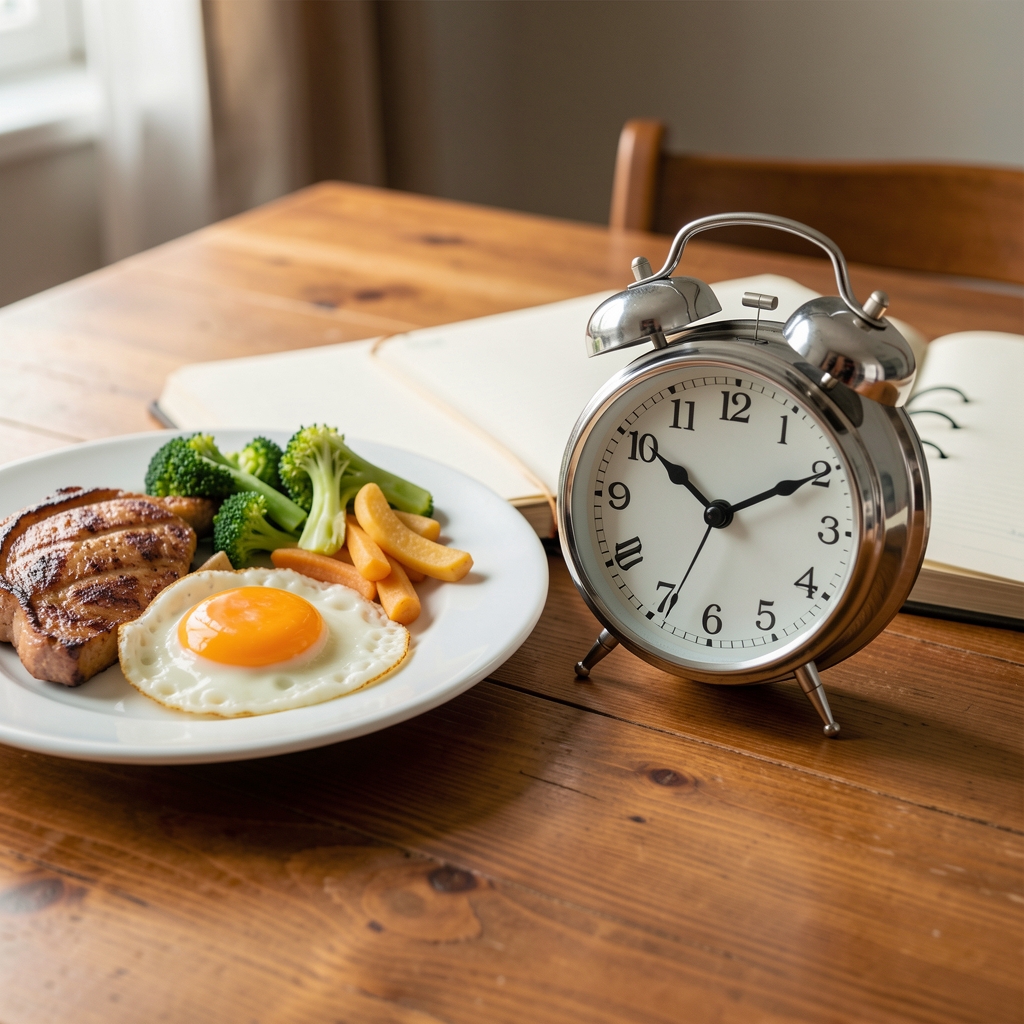

The Architecture of a Breakfast-First Day
Observations from London working households on the morning meal and its recorded relationship to energy distribution across the working day. A field-notes approach to breakfast timing.
An independent journal on eating rhythm and daily food scheduling in everyday life.
// Field observation archive — London, 2026
The question of what to eat has dominated nutritional conversation for decades. Falden Notebook directs its editorial attention to an adjacent and underexplored area: the timing, spacing, and rhythm of meals across the day. The publication is built on the premise that when food is consumed carries a patterned relationship to daily energy, appetite, and the body's own scheduling logic.
Every article in this journal is grounded in published nutritional research and reviewed by a second editor before publication. Sources are cited where appropriate, corrections are noted publicly, and writers disclose any commercial relationships that could influence subject matter selection.
The editorial perspective is observational and reportorial. No prescriptive schedules are promoted. No results are promised. The journal records what is known, notes what remains uncertain, and leaves the reader to draw their own informed conclusions.
Observations from London working households on the morning meal and its recorded relationship to energy distribution across the working day. A field-notes approach to breakfast timing.
Field notes on what the food journal reveals when the last meal of the day arrives after nine o'clock.
When the midday meal disappears from the schedule, what follows in the afternoon is a consistent and recordable pattern.
The relationship between the clock and the plate has been a subject of nutritional interest for decades. Falden Notebook examines published evidence on how meal timing associates with daily energy distribution, without overstating the certainty of findings.
Late-night food habits are among the most consistent entries in urban food journals. This journal considers what the published research says about evening eating patterns and their observed association with overnight rest quality.
Breakfast habits have attracted substantial study, and Falden Notebook navigates this body of research carefully, noting which findings are well-documented and which remain contested within peer-reviewed dietary literature.
The concept of body-clock-aligned eating has moved from specialist research into broader public conversation. The journal traces this trajectory with care, distinguishing between well-supported observations and speculative extrapolations.
Regular intervals and consistent meal times are associated in published nutritional research with more predictable appetite patterns. The journal reviews this evidence while acknowledging that individual context varies considerably.
The relationship between eating schedule and weight is a contested area of nutritional research. Falden Notebook navigates this landscape with editorial precision, presenting the evidence without resolving debates the literature itself has not resolved.
"The notebook records what has been observed. It does not declare what must be done. Every entry is a data point, not a directive."
Falden Notebook was established in London in 2026 as an independent editorial publication exploring the intersection of meal timing, daily food scheduling, and the rhythms that shape how people eat. The journal operates without commercial sponsorship from food or supplement industries.
Every article is written by an identified author and reviewed by at least one second editor before publication. The publication takes no advertising from the wellness industry and accepts no sponsored content.
About the Publication